


Chapter 3ADistribution of NBFC-MFIs across region and size
NBFC MFIs play an important role in the delivery of microfinance to the poor people. This category of institutions was created by the RBI based on the recommendations of the Malegam Committee in 2012, with a focus on microlending. As per the same, RBI has also fixed certain norms for including an asset as microfinance loans, generally known as qualifying assets and has also fixed its percentage in an institution for registering it as an NBFC-MFIs.

Performance of NBFC-MFIs in Microfinance
BFC MFIs play an important role in the delivery of microfinance to the poor people. This category of institutions was created by the RBI based on the recommendations of the Malegam Committee in 2012, with a focus on microlending. As per the same, RBI has also fixed certain norms for including an asset as microfinance loans, generally known as qualifying assets and has also fixed its percentage in an institution for registering it as an NBFC-MFIs.
NBFC-MFIs also have a similar regulatory framework to other NBFCs. In addition, it has something more to consider as an NBFC- MFI. Under the Scale-based Regulation 1, the Reserve Bank of India introduced a regulatory structure for NBFCs, which categorises all NBFCs in four layers based on their size, activity, and perceived riskiness. Out of the total 95 NBFC-MFIs registered with the RBI, 26 fall under the ‘Middle’ layer (non-deposit-taking NBFC with asset size above ₹1,000 Cr.), the rest are under the ‘Base’ layer (NBFC-ND with asset size below ₹1,000 Cr.). Subsequently, the RBI has also released several guidelines for NBFCs, including NBFC-MFIs, over the last five years. These guidelines include the appointment of an internal ombudsman, Prompt Corrective Action (PCA) Framework, and defining the role of Compliance Officers. Additionally, the RBI introduced a new Regulatory Framework for Microloans in 2022.
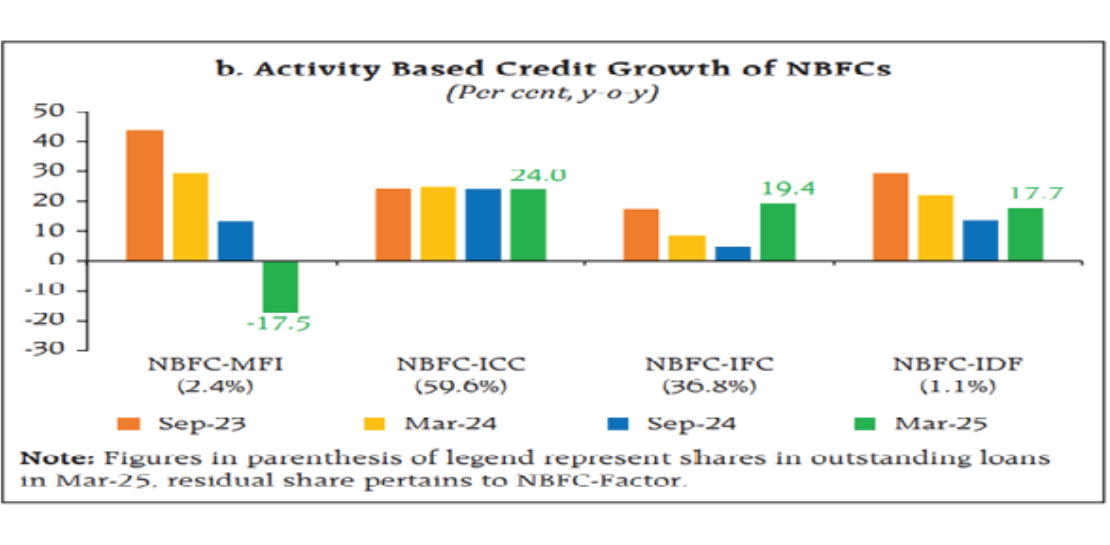
The retail credit (including Housing Finance, Vehicle Financing, Gold Loans, Education Loans, Consumer Durables, Personal loans, Credit cards, and Microfinance) in India stood at ₹75.2 trillion as of FY24 and has grown rapidly at a CAGR of 16.0% between FY2020 and FY2024. Retail credit growth in FY20 was approximately 12.1%, which decreased to approximately 9.6% in FY21. However, post-pandemic, retail credit growth revived, reaching approximately 13.5% in fiscal year 2022. In FY23, retail credit grew at approximately 22.3% year-over-year. The Indian retail credit market has grown at a strong pace over the past few years and is expected to continue growing at a CAGR of 17-18% between FY24 and FY26, reaching ₹100.9 trillion by FY262 . In terms of asset size and mix, housing loans and infrastructure loans continue to account for a significant portion of the overall NBFC portfolio. Microfinance loans have increased their share in retail loans from approximately 2% to 3% between fiscal years 2019 and 20233 . Considering activity- based classification, credit growth for the second-largest category of NBFCs (in terms of outstanding loans), namely NBFC-IFCs, has increased compared to March 2024. NBFC- MFI’s portfolio contracted in FY2024-25 as lenders exercised prudence in response to the stress in the portfolio4 .
Figure 3A.1: Activity-based5 Credit Growth of NBFCs
3.A.1 Distribution of NBFC-MFIs across region and size
Table 3.A.1: Region-wise distribution of NBFC-MFIs6
| Region | State/UT | No. of NBFC-MFIs |
|---|---|---|
| North | Delhi (9), Haryana (3), Rajasthan (2), Punjab (1) | 15 |
| East | Bihar (1), Odisha (4), Jharkhand (1), West Bengal (12) | 18 |
| West | Gujarat (5), Maharashtra (13) | 18 |
| South | Karnataka (11), Kerala (1), Tamil Nadu (16), Telangana (3) | 31 |
| North East | Assam (6), Manipur (1) | 7 |
| Central | Uttar Pradesh (5), Chhattisgarh (1) | 6 |
| Total | 95 |
Table 3.A.2 Size-wise distribution of NBFC-MFIs
| Size | No. of NBFC-MFIs | Gross Loan Portfolio (in ₹ Cr.) | Share out of the total Portfolio |
|---|---|---|---|
| Small (<₹100 Cr.) | 36 | 1,357 | 0.83% |
| Medium (₹100 Cr.–₹500 Cr.) | 22 | 4,735 | 2.92% |
| Large (₹500 Cr.–₹2,000 Cr.) | 16 | 17,173 | 10.59% |
| Very Large (>₹2,000 Cr.) | 16 | 1,38,898 | 85.65% |
| Total | 90 | 1,62,163 |
3.A.2 Geographical Spread
The geographical coverage of NBFC-MFIs differ in varying degrees depending on their size. The highest number of States in which a single NBFC-MFI operates is 27 States, and at the district level, 488 districts.
Table 3 A.3a: No. of NBFC-MFIs in States/UTs
| No. of States/UTs | No. of NBFC-MFIs |
|---|---|
| 1 | 12 |
| 2 to 5 | 39 |
| 6 to 10 | 16 |
| 11 to 20 | 16 |
| >20 | 7 |
| Total | 90 |
Table 3.A.3b: No. of NBFC-MFIs in Districts
| No. of Districts | No. of NBFC-MFIs |
|---|---|
| 1 to 20 | 33 |
| 21 to 50 | 22 |
| 51–150 | 14 |
| 151–400 | 14 |
| 400 | 7 |
| Total | 90 |
3.A.3 Branch Network
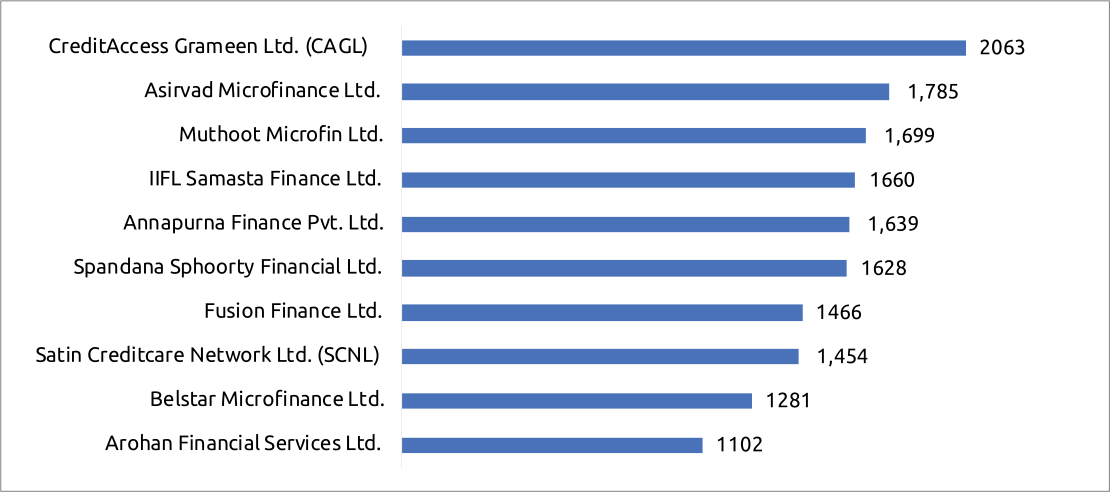
The total number of branches of NBFC-MFIs was 27,687 as of the end of March 2025. During the year 3,102 branches were added, and 408 branches had closed their operations.
Table 3.A.4 Distribution of Branches across various sizes of NBFC-MFIs
| Size | Total Branches added during FY 2024-25 | Total Branches closed during FY 2024-25 | Total Branches at the end of March 2025 |
|---|---|---|---|
| Small (<₹100 Cr.) | 118 | 16 | 806 |
| Medium (₹100 Cr.–₹500 Cr.) | 209 | 161 | 2,442 |
| Large (₹500 Cr.–₹2,000 Cr.) | 739 | 124 | 3,981 |
| Very Large (>₹2,000 Cr.) | 2,036 | 107 | 20,458 |
| Total | 3,102 | 408 | 27,687 |
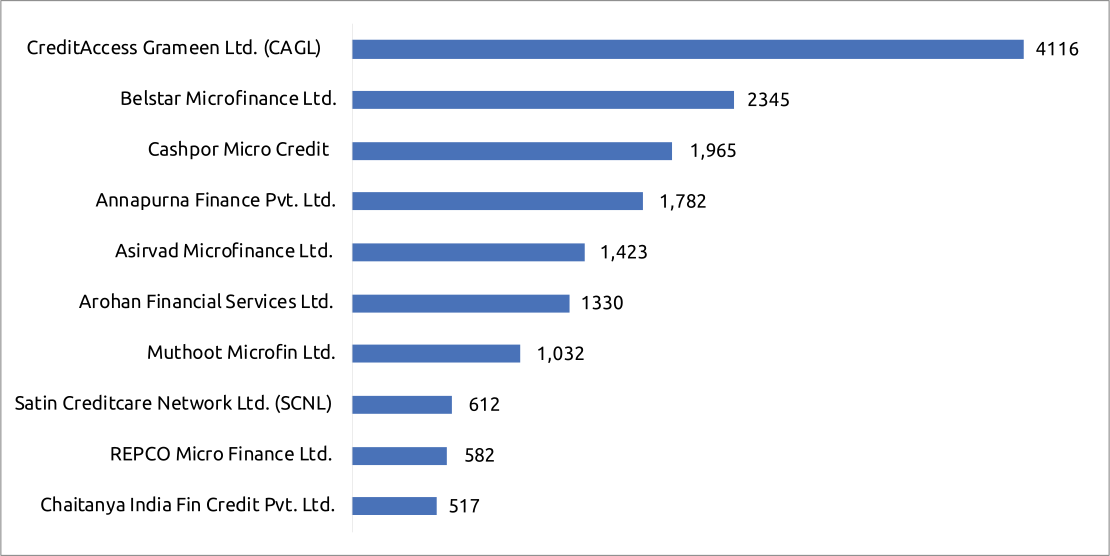
Figure 3.A.2 Top 10 NBFC-MFIs in terms of Branches
3.A.4 Workforce in NBFC-MFIs
NBFC-MFIs employ 2.54 lakh staff, and during FY2024-25, 1.59 lakh new staff were recruited, while 1.27 lakh staff left their organisation.
Overall attrition rate7 for NBFC-MFIs, the figure was 53.5% during the FY2024-25.
Table 3.A.5 Size-wise distribution of Staff
| Size | Total staff added during FY 2024-25 | Total staff left during FY 2024-25 | Total staff at the end of March 2025 |
|---|---|---|---|
| Small (<₹100 Cr.) | 2,611 | 1,701 | 4,088 |
| Medium (₹100 Cr.–₹500 Cr.) | 8,582 | 8,614 | 13,164 |
| Large (₹500 Cr.–₹2,000 Cr.) | 20,878 | 18,182 | 31,076 |
| Very Large (>₹2,000 Cr.) | 1,26,756 | 98,829 | 2,05,359 |
| Total | 1,58,827 | 1,27,326 | 2,53,687 |
Overall, 21,496 women employees work in NBFC-MFIs, which accounts for 8% of the total employee base. Out of which 13,531 are women loan officers, which is again 8% of the total loan officers and 63% of the total women employees. The rest being in Head office or other controlling offices. Figure 3.A.3 depicts the size-wise and gender-wise distribution of staff.
Figure 3.A.3 Composition of staff based on activity, gender and size
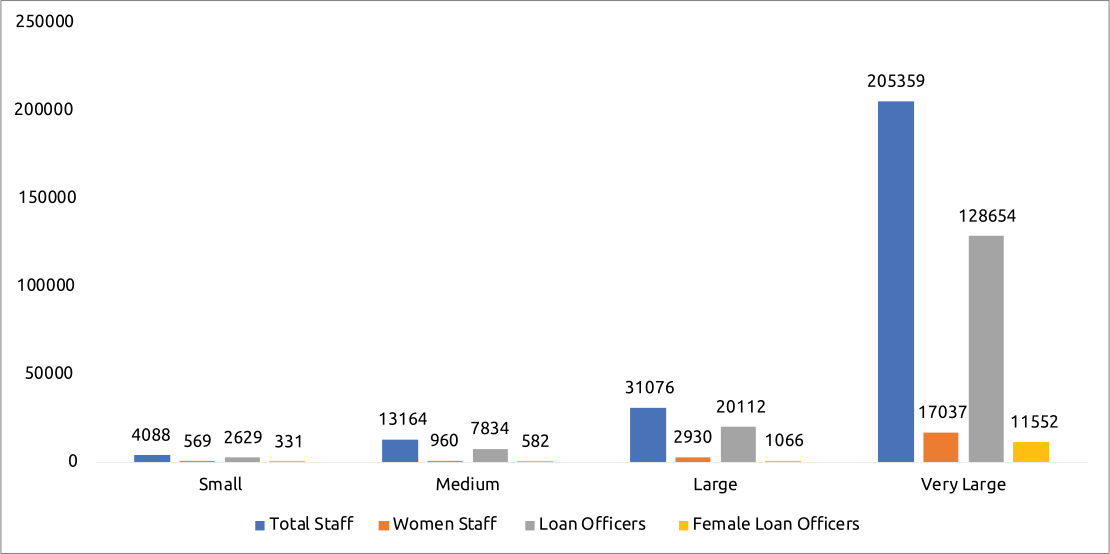
Figure 3.A.4 Top 10 NBFC-MFIs in terms of Women Employees
3.A.5 Client Outreach
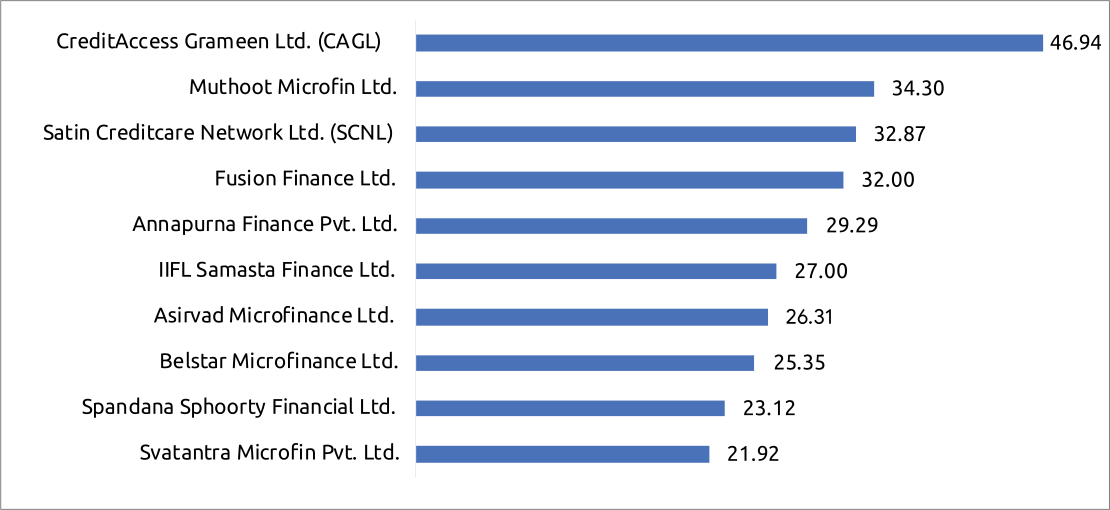
NBFC-MFIs are serving 4.43 crore borrowers, which form 71% of the total clients served by the MLIs. Of this, 80% are from the Rural segment. During FY2024-25, approximately 103 lakh new borrowers were added by NBFC- MFIs. About 92% of the borrowers served by NBFC-MFIs are women. Out of 4.43 crore active borrowers, 36 lakhs are served through the Business Correspondent model.
Figure 3.A.5 Distribution of Active Borrowers (in lakhs)
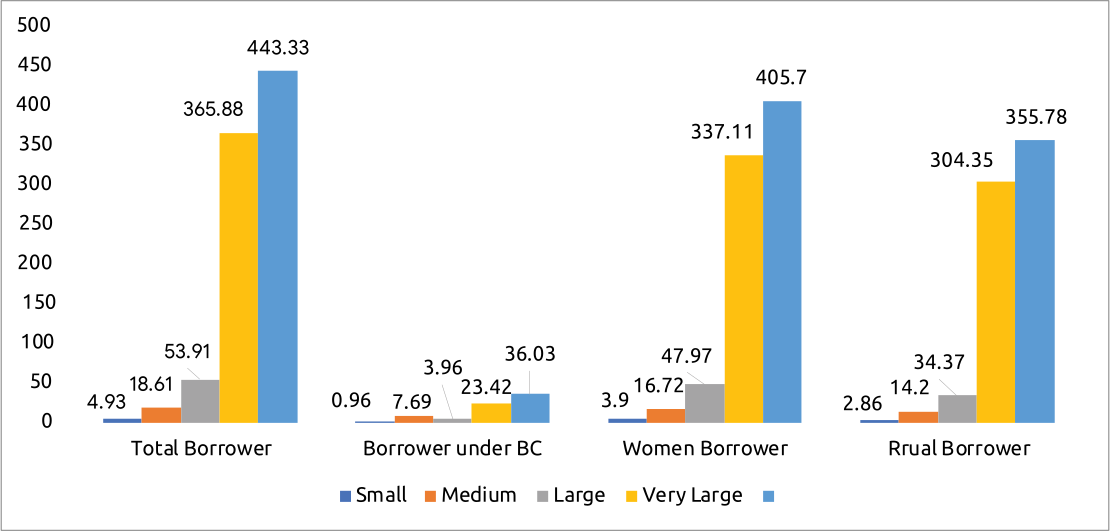
Figure 3 A.6: Top 10 NBFC-MFIs in terms of Active Borrowers (in lakhs)
3.A.6 Portfolio
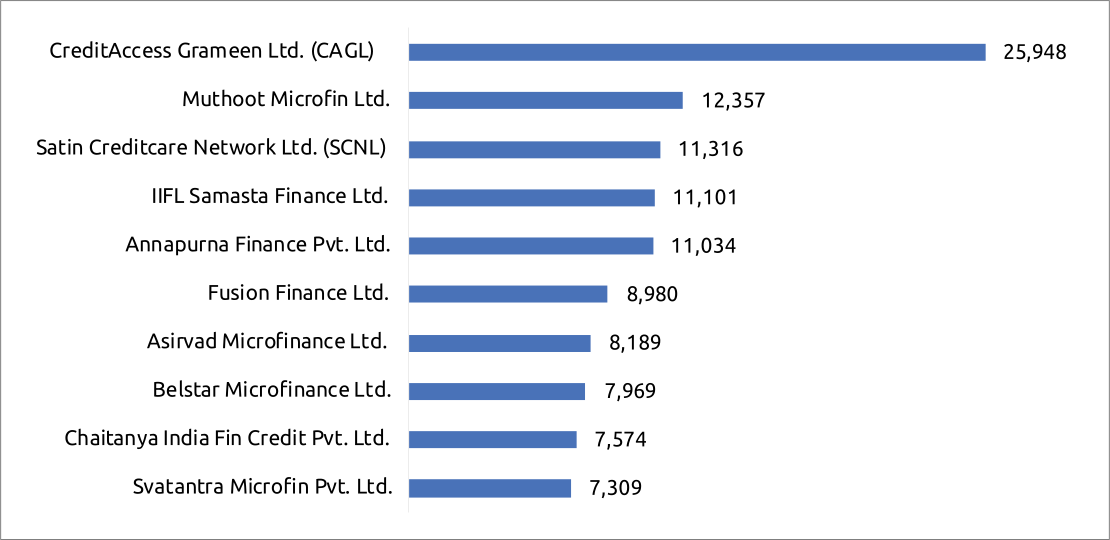
The total gross loan portfolio served by NBFC-MFIs (both on- and off-balance sheet) stands at ₹1,62,163 crores, as compare to ₹2,38,198 crores by Microlending institutions (MLIs) in total, as of March 2025. Out of the Gross loan portfolio of NBFC-MFIs, ₹11,120 crores are under the Business Correspondent model, which is 7% of the Gross Loan Portfolio. Additionally, approximately 1% of the GLP is under the Co-Lending model. Out of the total GLP, 83% of the portfolio is originated through the JLG model. Table 3.A.6 depicts the size- wise distribution of the loan portfolio under various categories.
Table 3.A.6 Size-wise distribution of portfolio under various categories
| Gross Loan Portfolio (in ₹ cr) | Own Portfolio (in ₹ cr) | BC Portfolio (in ₹ cr) | Co-Lending Portfolio (in ₹ cr) | Portfolio8 under JLG (in ₹ cr) | Portfolio9 under Individual lending (in ₹ cr) | |
|---|---|---|---|---|---|---|
| Small | 1,357 | 1,001 | 300 | - | 1,213 | 116 |
| Medium | 4,735 | 2,175 | 2,146 | 1 | 4,080 | 364 |
| Large | 17,173 | 11,062 | 2,441 | 1,417 | 14,417 | 2,361 |
| Very Large | 1,38,898 | 91,774 | 3,007 | 212 | 97,065 | 9,831 |
| Total | 1,62,163 | 1,06,012 | 7,894 | 1,630 | 1,16,775 | 12,672 |
Figure 3.A.7 Top 10 NBFC-MFIs in terms of Gross Loan Portfolio
3.A.7 Disbursement
During FY2024-25, NBFC-MFIs disbursed ₹1,24,334 crores in 2.44 crores loan accounts, as against ₹186,318 crores and 3.43 crores loan accounts by MLIs in total. In Table 3.A.7, a distribution of loan accounts and amount disbursed based on the size of NBFC-MFI and the loan category.
Table 3.A.7 Distribution of disbursement based on the size of NBFC-MFIs
| Number of loans disbursed under microfinance (in lakhs) | Number of loans disbursed under non-microfinance (in lakhs) | Total Loan disbursed (in lakhs) | Amount disbursed under microfinance (in ₹ cr) | Amount disbursed under non-microfinance (in ₹ cr) | Total amount disbursed (in ₹ cr) | |
|---|---|---|---|---|---|---|
| Small (<₹100 Cr.) | 2.2 | 0.58 | 2.78 | 951 | 83 | 1,034 |
| Medium (₹100 Cr.–₹500 Cr.) | 7.9 | 3.85 | 11.75 | 3,548 | 4 | 3,552 |
| Large (₹500 Cr.–₹2,000 Cr.) | 24.38 | 4.64 | 29.02 | 11,818 | 628 | 12,446 |
| Very Large (>₹2,000 Cr.) | 164.06 | 20.02 | 184.08 | 91,760 | 8,931 | 1,00,692 |
| Total | 198.54 | 29.09 | 227.63 | 1,08,077 | 9,646 | 1,17,724 |
Note: incomplete data
3.A.8 Portfolio Quality
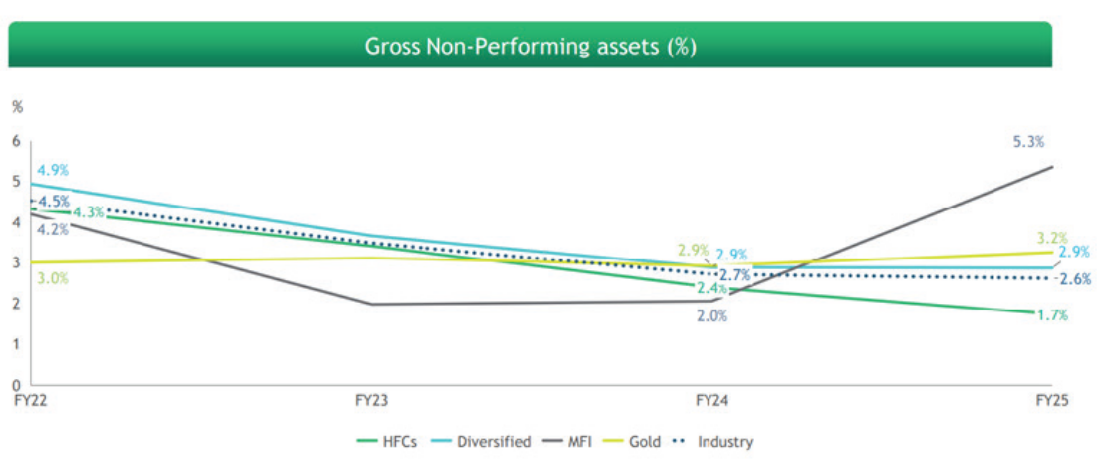
The portfolio quality of microfinance deteriorated significantly during FY2024- 25. During the FY2024-25, NBFC-MFIs have written off ₹7,046.62 crores. However, the other types of loan segments do not observe the same trend. The chart below displays the Gross NPA across various loan segments.
Figure 3.A.8: Asset quality for the NBFC sector10
The PAR value for various buckets for different sizes of NBFC-MFIs is depicted in the table below.
Table 3 A.8: Portfolio Quality of NBFC-MFIs under different buckets (Based on weighted average values)
| Category of NBFC-MFIs | PAR>30 | PAR>60 | PAR>90 | PAR>180 |
|---|---|---|---|---|
| Small (<₹100 Cr.) | 5.70% | 3.74% | 3.01% | 1.71% |
| Medium (₹100 Cr.–₹500 Cr.) | 8.33% | 7.02% | 5.96% | 4.05% |
| Large (₹500 Cr.–₹2,000 Cr.) | 8.45% | 6.59% | 4.86% | 2.21% |
| Very Large (>₹2,000 Cr.) | 6.42% | 5.07% | 3.90% | 1.61% |
| Overall | 6.68% | 5.27% | 4.05% | 1.74% |
3.A.9 Pricing of Credit
Following the issuance of the new regulation in March 2022, concerns over high interest rates charged by NBFC-MFIs have been highlighted in various forums by the RBI and other stakeholders. However, it can be observed that the interest rate is a function of the cost of funds, expected credit loss and the net margin. The higher cost of borrowing and increasing ECL make the interest rates higher. More so due to higher borrowing costs.
Figure 3 A.9: Weighted Average Cost of Fund, Operating Cost and Interest Rate
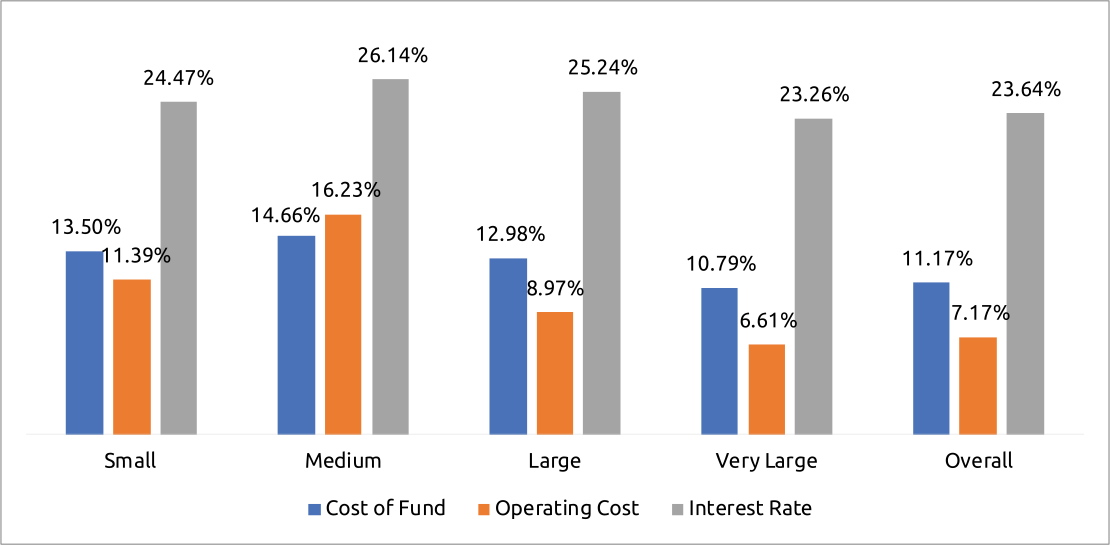
There are six NBFC-MFIs that charge a weighted average interest rate of less than 20% to their microfinance borrowers.
Table 3.A.9: Number of NBFC-MFIs under various ranges of weighted average interest rate charged to Microfinance Borrowers
| Interest rate range | Number of NBFC-MFIs |
|---|---|
| Less than or equal to 20% | 6 |
| 20%–22% | 4 |
| 22%–24% | 16 |
| 24%–26% | 22 |
| Above 26%* | 27 |
* The highest interest rate is 33.5%
Conclusion
NBFC-MFIs have emerged as a critical pillar in expanding financial inclusion, particularly for rural and women borrowers. Their outreach has expanded with increased geographical coverage, expanded branch networks, and significant client growth. However, FY2024- 25 highlighted stress in portfolio quality, with rising PAR levels and substantial write-offs, reflecting heightened credit risk. Despite strong disbursement volumes and increasing asset size, sustainability remains challenged by high operating costs, staff attrition, and pricing pressures. In the future, balancing growth with prudent risk management and ensuring affordable credit will be vital for strengthening resilience and maintaining their role in inclusive financial development.
Box: 3A.1 SANKALP 2.0: Guidelines for Micro Lending Institutions (MLIs)
The Microfinance went through some stressful times in the last few months. Sensing the stress in the microfinance sector, Sa-Dhan convened a meeting of CEOs of MFIs and other institutions on 23rd July 2024 at Bengaluru, wherein it was decided to put some additional guardrails, SANKALP 1.0, to control the over-exposure of loans.
The SANKALP 1.0 was reviewed in the meeting of CEOs on 24 April 2025, in New Delhi, and felt that although the microfinance sector could reduce the over exposure significantly, to consolidate the position there was a need for few more measures of caution. Accordingly, a few additional guardrails were added and issued as SANKALP 2.0.
Three key issues to be addressed through guardrails are:
- Pricing: Transparent and fair pricing of loans.
- Over-indebtedness: Control Over-lending and over exposure.
- Discipline: Adherence to the Code of Conduct and Responsible lending practices.
The new set of guardrails in the form of SANKALPS, (combining both the Sankalps) is as under:
Over Indebtedness
Guideline 1: The number of lenders for microfinance loans shall not exceed 3 (THREE), from all types of lenders.
Guideline 2: While considering a fresh loan, the combined exposure of a household in microfinance and unsecured retail loans shall not exceed ₹2,00,000, subject to RBI- prescribed repayment obligation cap of 50% of the household’s monthly income.
Guideline 3: No fresh loan to the same borrower, whose existing loan is still continuing as outstanding, before 12 months of disbursement or has not completed 50% repayment
Guideline 4: Every microfinance loan should mandatorily do a comprehensive credit bureau check at the household level.
Pricing of Loans
Guideline 5: Lending Institutions should follow transparent practices in deciding the pricing of loans. Components of the rate of interest (Cost of Funds, Opex Cost, Risk Margin and Margin) should be well defined and in compliance with guidelines issued from time to time. The Rate of Interest should be justifiable and approved by the Board of lending institutions.
Guideline 6: Processing fee to be capped at 1.5% (excluding applicable taxes)
Code of Conduct and Discipline
Guideline 7: No loan to be given to clients who is in default of any loan amount, and such due shall not exceed ₹3,000 and remain unpaid for more than 60 days (60+ dpd). Efforts should be made to bring down the norm of the delinquency level to 30+ dpd, to improve the hygiene of loan assets.
Guideline 8: The MFIs should move towards making PAN Card as the first ID for KYC and Credit bureau reporting. An aspirational level of 30% coverage through PAN may be attempted in a year time.
Guideline 9: The end use of loans to be verified to ensure proper utilization of loans.
Guideline 10: Do a mandatory employee bureau check before hiring. Any staff hired from the microfinance industry should only be given three months’ time to produce a relieving letter. The lending institutions should also not withhold the relieving letter of any staff member without a justifiable reason.
The guardrails under SANKALP 2.0 was made applicable from 1st June 2025.