


Chapter 4 - Section 4.2Asset Quality in MLIs
In a recent report by CRISIL Ratings , it was highlighted that Asset quality, Capitalisation, Earnings, and Resource profile are considered the core parameters for assessing the credit risk profiles of financial institutions. Asset quality indicates the risk levels at which a FI is operating. In contrast, capitalisation indicates the cushion available to absorb potential losses that may arise due to the risks taken and to ensure growth. Weakening in asset quality can erode earnings and, consequently, the capital cushion available to absorb losses, while adequate capitalisation can help absorb losses and ensure sustainable loan growth. Earnings indicate the ability to appropriately price risks and generate risk-adjusted returns, thereby augmenting the capital base. The resource profile is determined by the cost and stability of funds, which are key to ensuring smooth functioning and maintaining operational stability.


MLI Loan Portfolio at Risk (PAR)
Distribution of MLIs Based on PAR
Portfolio quality at various overdue buckets based on weighted average values
Chapter 4: Section II
Asset Quality in MLIs
n a recent report by CRISIL Ratings , it was highlighted that Asset quality, Capitalisation, Earnings, and Resource profile are considered the core parameters for assessing the credit risk profiles of financial institutions. Asset quality indicates the risk levels at which a FI is operating. In contrast, capitalisation indicates the cushion available to absorb potential losses that may arise due to the risks taken and to ensure growth. Weakening in asset quality can erode earnings and, consequently, the capital cushion available to absorb losses, while adequate capitalisation can help absorb losses and ensure sustainable loan growth. Earnings indicate the ability to appropriately price risks and generate risk-adjusted returns, thereby augmenting the capital base. The resource profile is determined by the cost and stability of funds, which are key to ensuring smooth functioning and maintaining operational stability.
In the previous chapter, the resource profile in terms of the employee base of the MLIs, which is essential for maintaining operational stability, was covered. In this chapter, the asset quality of the microfinance industry is discussed. The other aspects, such as earnings and cost structure, will be addressed in the subsequent chapters. The trend of the portfolio at risk (PAR) for the overall sector is discussed in detail in Chapter 2. Here, the details of the trends of PAR values of MLIs (NBFC-MFIs, NBFCs and NFPs) over their overall portfolio (this includes the managed portfolio of the FI as well) is covered.
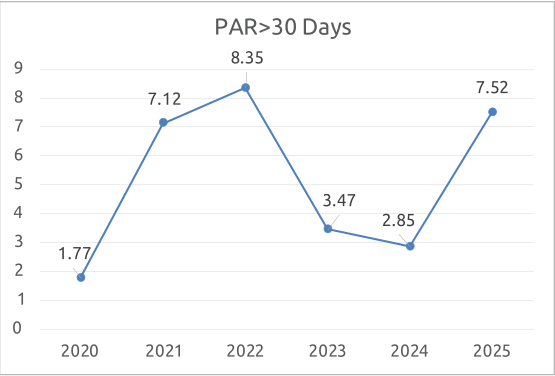
Various studies over the years have established a direct relationship between asset quality and the performance of financial institutions (FIs). The graphs below (Figure 4.2.1), indicates that PAR>30 dpd has increased to 7.52% at the end of the financial year 2024-25. The upward trend of PAR > 30 began in June 2024 and reached its peak by the end of March 2025. This year, particularly, was stressful for the microfinance industry due to various external and internal issues. The industry has experienced an increase in borrowers’ indebtedness at the end of FY2023-24, which was a result of a combination of many factors, such as pent-up demand following the pandemic, among other reasons. In addition to these, external factors such as heatwaves, prolonged general elections, and loan waiver movements like the Karz Mukti Abhiyan impacted the collection efficiency. These challenges are further aggravated by the weakening of the Joint Liability Group model, characterised by a notable decrease in centre meeting attendance and diminished peer pressure and collective accountability, which have historically helped maintain low default rates. Additionally, high attrition rates among field staff present operational hurdles, as frequent turnover disrupts client relationships and hampers loan recovery efforts. All these contributed to the upward trend of the delinquency rate.
4https://www.crisilratings.com/mnt/winshare/Ratings/SectorMethodology/MethodologyDocs/criteria/Criteria%20for%20 Banks%20and%20Financial%20Institutions%20(including%20approach%20for%20financial%20ratios)_1603.pdf
2 All overdues above 30 days.
Figure 4.2.1: MLI Loan Portfolio at Risk (PAR)
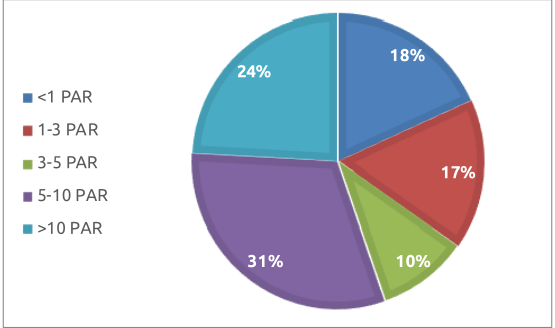
The delinquency data of individual institutions show that there was an upward trend in delinquency during the year. The distribution of the MLIs having PAR values >30 dpd is presented in Figure 4.2.2. In the FY 2023-24, the number of MLIs was skewed towards the lower PAR values. However, this year it is observed that there was a double skew both towards lower values and higher values, but with a greater skew towards higher PAR values, with a median value of 5.44%.
Figure 4.2.2: Distribution of MLIs Based on PAR
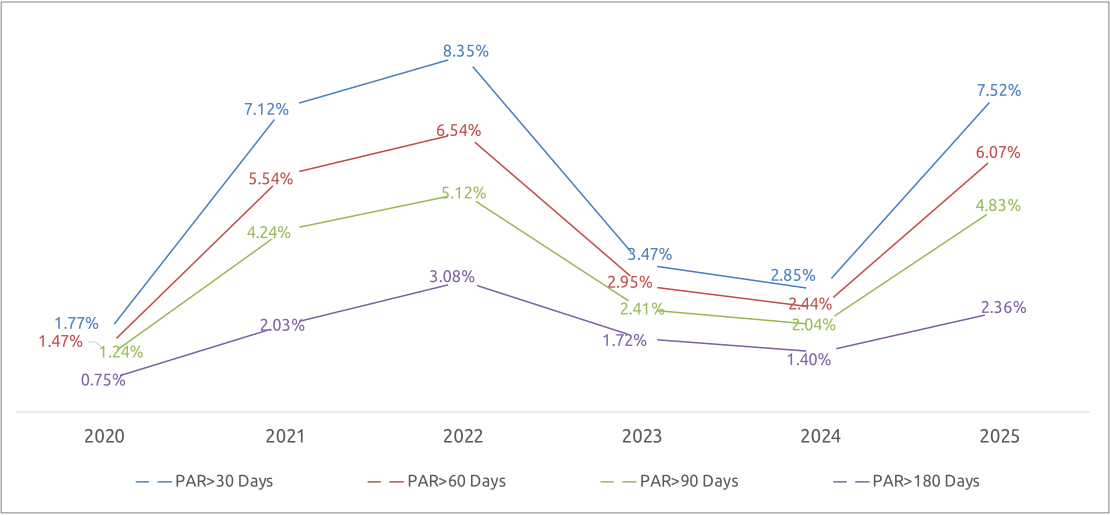
In Figure 4.2.3, a similar trend, such as PAR > 30 dpd, can be observed in all buckets. However, the slope of the different buckets is different. PAR > 30 dpd witnessed the steepest slope, and PAR > 180 dpd witnessed the comparatively flatter slope. PAR > 60 and PAR > 90 saw a similar slope to PAR > 30 dpd. This shows a sharp re-emergence of repayment stress across all buckets, with early delinquency leading the way. SROs are working closely with sector leaders, the regulator, and other stakeholders to monitor this trend, ensuring it does not escalate into an NPA crisis in 2026.
Figure 4.2.3: Portfolio quality at various overdue buckets based on weighted average values
The overall PAR values for various portfolio sizes are presented below. The data, based on different legal forms for two buckets, PAR > 30 dpd and PAR > 60 dpd, is presented in Fig. 4.2.4. The rise in PAR values, based on different portfolio sizes, was not as sharp. The large MLIs observed the highest increase to 9.25%, which also includes a portion of 180+dpd that was not written off.
Figure 4.2.4: Size-wise Portfolio quality (based on all overdue, including overdue above 179 days)3 - Weighted average value
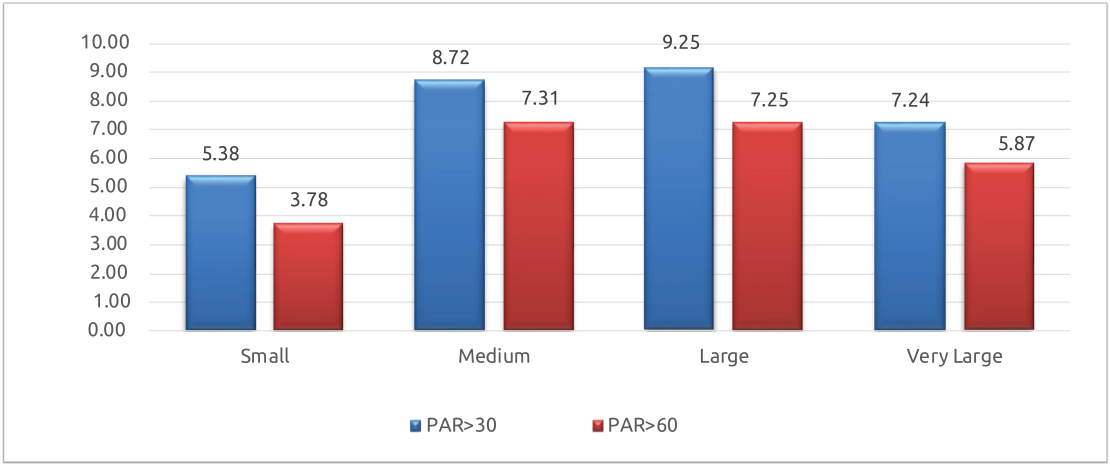
According to the regulations, PAR exceeding 180 days has to be fully provided for. As a result, most of the amount exceeding 180+dpd have been provided, and most of them have also been written off. But in the credit bureau, it continues to be there, thereby having a higher PAR value for the PAR above 180+ days
Conclusion
The rising PAR values across all delinquency buckets in FY2024–25 point to mounting stress in the microfinance industry. Borrower over-indebtedness, socio-political disruptions,weakening of the Joint Liability Group model, and high staff attrition have collectively driven this trend.
Larger MLIs have seen the sharpest deterioration, highlighting systemic vulnerabilities. While stronger players show some resilience, the overall skew towards higher PAR values raises concerns of a potential NPA crisis if left unchecked. Proactive measures in credit discipline, staff retention, and portfolio monitoring are essential to safeguard asset quality and sector stability.