

Chapter 4 - Section 4.3 - SubSection 4.3.1Expenditure Analysis
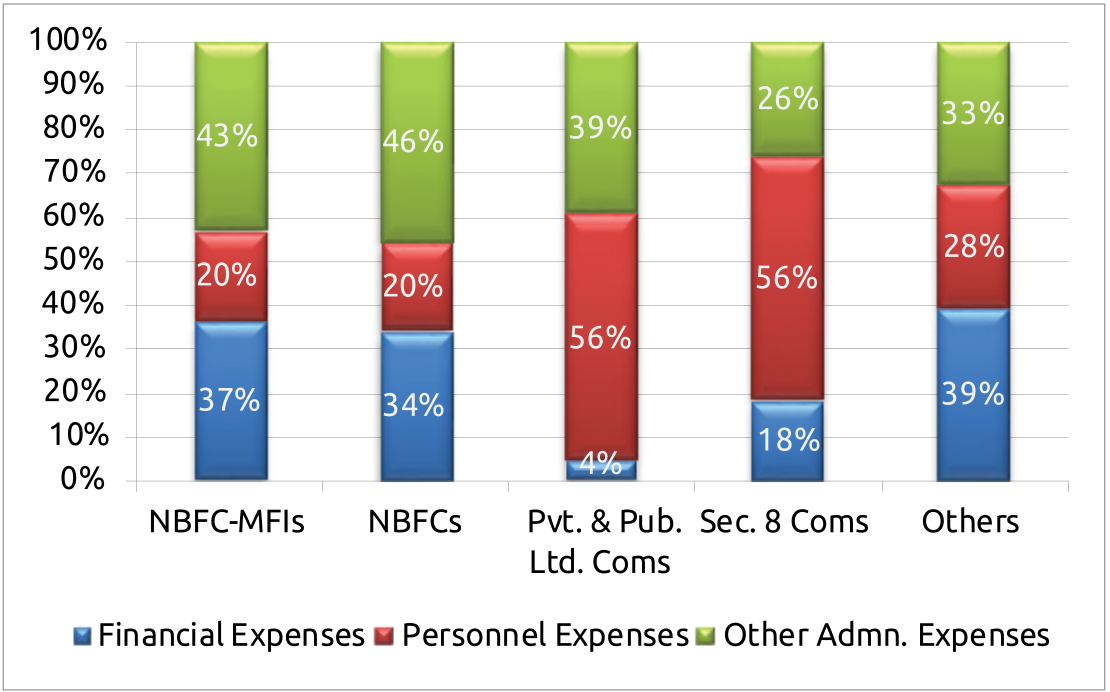
Since MLIs in India are not permitted to take deposits, the microfinance model is heavily dependent on raising debt funds from Banks for on-lending. Therefore, the significant component of MLIs’ cost structure is financial cost. The finance cost is followed by personnel (human resources) cost, as the model is heavily labour-intensive due to the door-todoor collection method. However, for the FY 2024-25, this composition changed due to an increase in Loan Loss Provision Expenses.


Break up of expenses by Indian MLIs
Break up of expenses by Indian MLIs based on Legal form
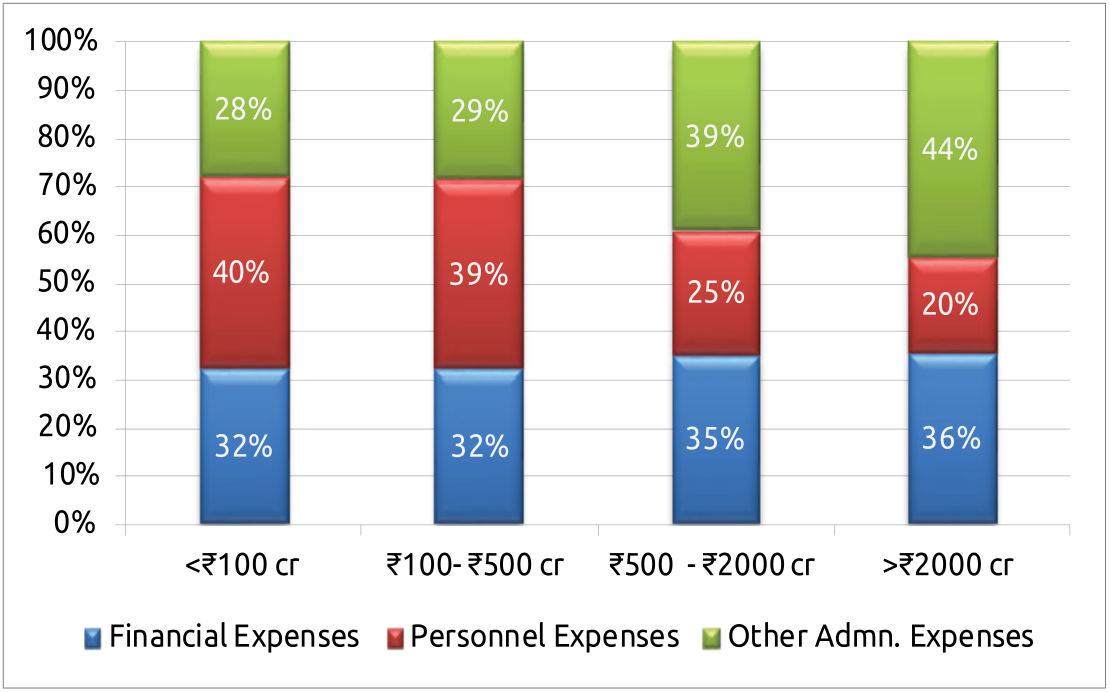
Break up of expenses by Indian MLIs based on Porfolio size
4.3.1 Expenditure Analysis
Since MLIs in India are not permitted to take deposits, the microfinance model is heavily dependent on raising debt funds from Banks for on-lending. Therefore, the significant component of MLIs’ cost structure is financial cost. The finance cost is followed by personnel (human resources) cost, as the model is heavily labour-intensive due to the door-todoor collection method. However, for the FY 2024-25, this composition changed due to an increase in Loan Loss Provision Expenses. This An analysis of different legal forms indicates a change in the composition of expenses, especially in the case of ‘Pvt & Pub Ltd Coms. For this segment, the most significant expense is personnel cost. These types of MLIs only operate as Business Correspondents as per the guidelines shared by the Ministry of Corporate Affairs, and hence, there is no financial cost, as they incur little cost to raise funds. Interestingly, a similar trend can be observed in the case of Section 8 companies, too.
Figure 4.3.2: Break up of expenses by Indian MLIs based on portfolio size and legal form
4.3.1.i Operating Cost1
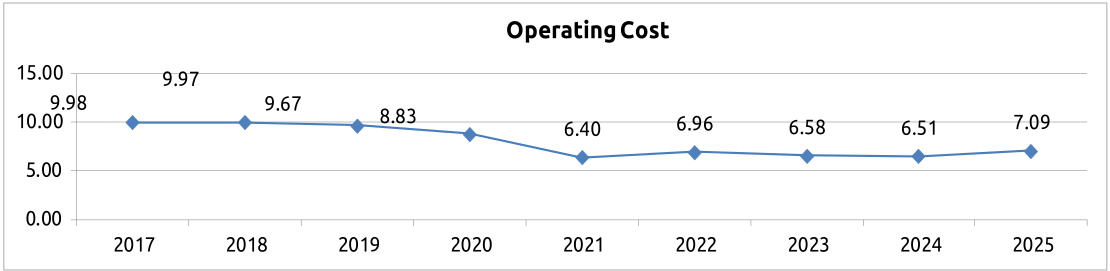
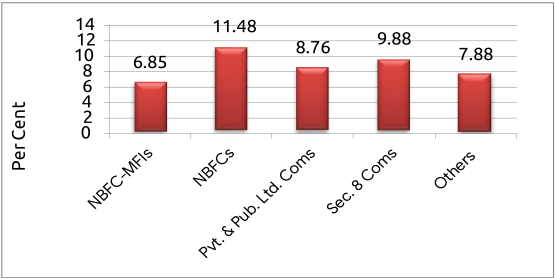
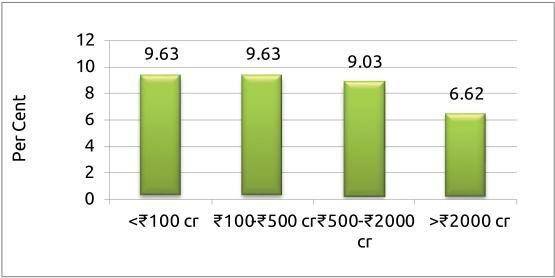
Operating costs play a critical role in shaping the pricing structure of MLIs, as they directly influence the interest rates and fees charged to borrowers. Since these institutions function on narrow margins, any increase in cost is often transferred to clients, raising their repayment burden and affecting institutional self-reliance. A lower operating cost ratio signals higher efficiency, enabling MLIs to provide affordable loans, improve competitiveness, and extend outreach. In contrast, rising costs diminish lending capacity, squeeze profitability, and risk, pushing institutions toward donor dependence. Over the past five years, operating costs hovered around 6-7%, largely driven by elevated delinquencies, staff attrition, and efforts to expand into underserved markets.
Figure 4.3.3: Trends of Operating Cost across MLI Categories
1 Define as (Personnel Cost including incentive + Travel Cost + Admin Cost + Group Dev. Cost/Training Cost + Depreciation + Any Others)/Average Portfolio Outstanding.
4.3.1.ii Finance Cost2
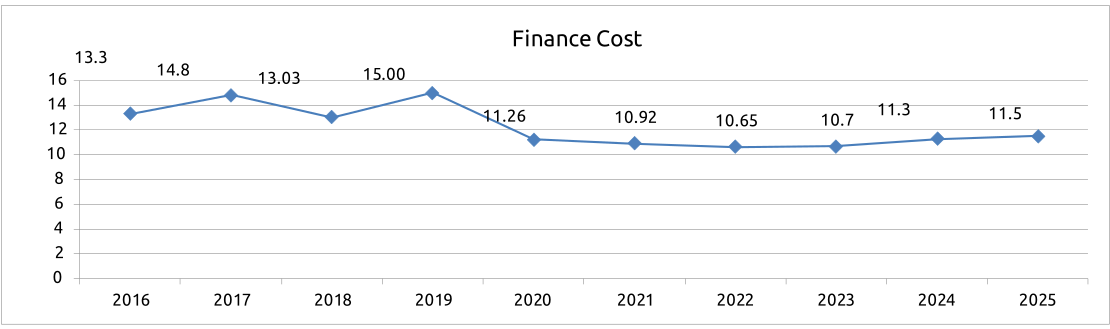
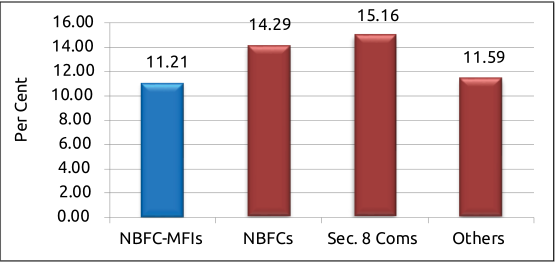
Finance costs are equally decisive, as they determine both lending rates and the extent of outreach. Persistently high finance costs leave MLIs with limited flexibility, often compelling them to raise interest rates, which reduces affordability and can also strain repayment behaviour. In contrast, periods of declining finance costs have allowed institutions to price loans more competitively, strengthen repayment discipline, and broaden their client base. Lower borrowing costs have also supported better margins, enabling MLIs to build reserves and reinvest in growth. Conversely, elevated finance costs have curtailed expansion, undermined profitability, and increased dependence on subsidies or external donor support. Between 2018 and 2025, managing finance costs has remained central to balancing financial sustainability with client affordability, underscoring its role as a cornerstone of microfinance operations.
Figure 4.3.4: Trends of Finance Cost across MLI Categories
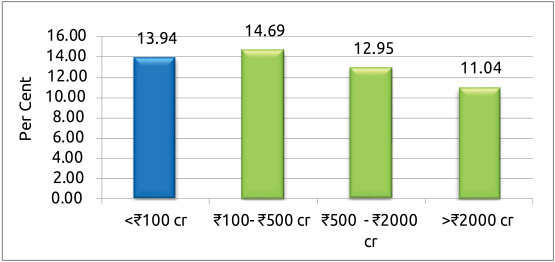
4.3.1.iii Trends of OperatingCost and Finance Cost
Finance costs and operating costs have consistently played a significant role in determining portfolio quality, as measured by PAR exceeding 30 days. High costs increase the pressure on MLIs to charge higher interest rates and fees, which in turn reduces borrower repayment capacity and raises delinquency risk. Conversely, when costs have been better controlled, institutions have been able to maintain more affordable lending terms and support the health of their portfolios. In 2021– 22, despite moderating finance costs, high operating costs and overall expense pressures coincided with the covid pandemic, made a surge in PAR to above 7%, indicating weakened borrower repayment capacity. In 2023–24, both costs stabilized, and PAR dropped to below 3%, highlighting how efficiency gains supported repayment discipline and portfolio health. By 2025, rising finance costs (11.5%) and operating costs (7.09%) again pushed PAR up to 7.52%. This demonstrates that cost control is essential not just for profitability but also for credit risk management.
2 Define as the Total expense incurred for acquiring funds /Average Outstanding Borrowings
4.3.1.iv Cost per borrower
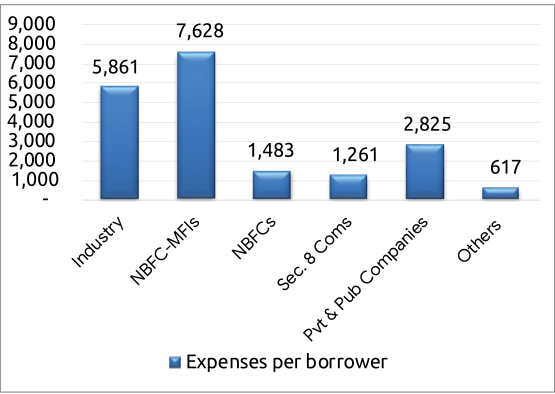
An analysis of MLIs’ income and cost structure from the perspective of cost and income per active borrower can help to understand the sustainability of the income-cost structure of the MLI. For Micro Lending Institutions (MLIs), cost per borrower is a critical indicator of operational efficiency, sustainability, and ability to serve clients effectively. A lower cost per borrower suggests the MLI is efficient in its operations and can potentially offer lower interest rates or greater outreach to the poor. Conversely, a high cost per borrower may signal inefficiencies that hinder expansion, require higher interest rates to remain viable, or limit financial inclusion
The data shows that MLIs face a narrow margin3 between expenses4 (₹5,861) and income5 (₹5,780) per borrower, reflecting overall financial strain. Expenses per borrower vary widely across institutions, shaping efficiency and risk. NBFC-MFIs incur the highest costs (₹7,628), reflecting fieldintensive operations and compliance needs, but such high expenses pressure margins and borrower affordability. NBFCs (₹1,483) and Section 8 companies (₹1,261) show far leaner models, indicating stronger cost efficiency. Smaller MFIs (<₹100 cr) manage relatively low expenses (₹4,758), while mid-sized and large MFIs see rising costs above ₹6,000 per borrower, suggesting diseconomies of scale. Overall, higher expenses often result in thinner surpluses, repayment stress, and increased credit risk.
Figure 4.3.5 Expenses per borrower under various categories