

Chapter 5 - Section 5.2SHG-BLP Activity since Inception
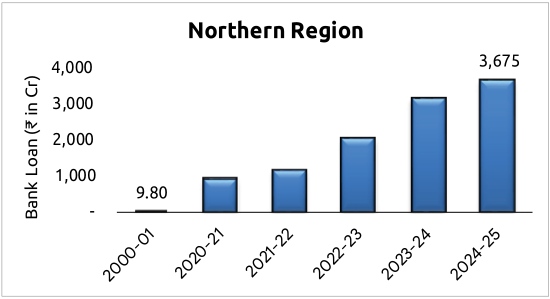
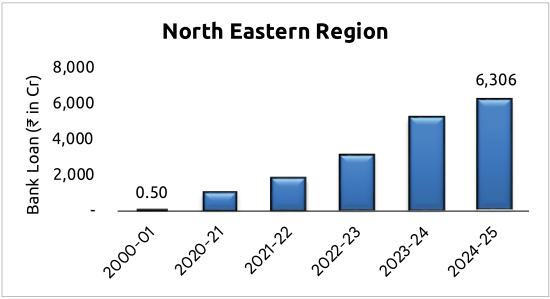
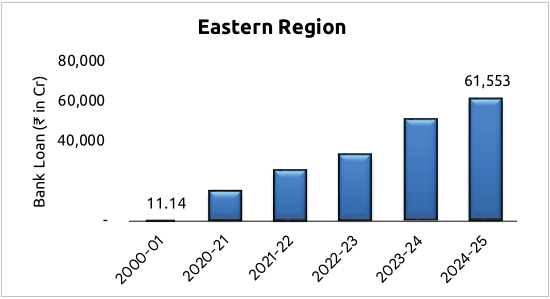
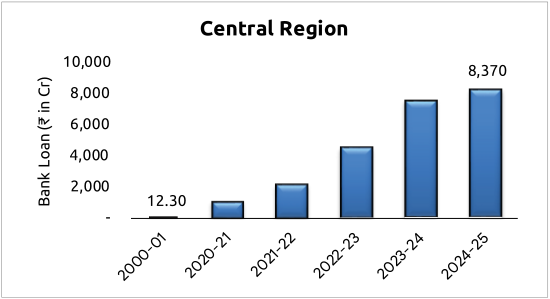
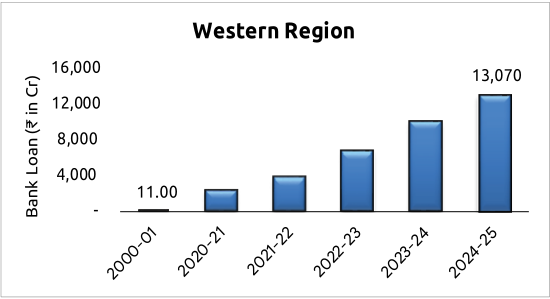
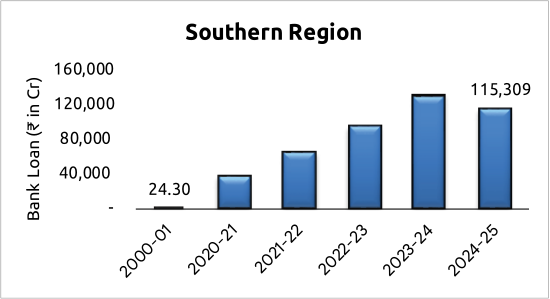
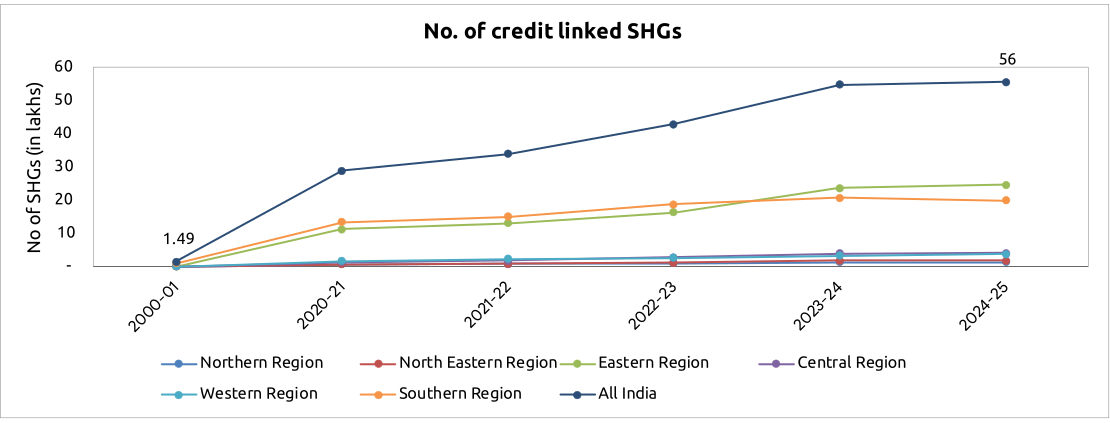
The programme has grown steadily in the past 25 years. Both the number of credit-linked SHGs and the bank loan disbursed have grown significantly from the year 2000 to 2025. Not just pan India but across the regions the outreach and credit disbursed have increased manifold, showcasing the enduring strength of SHG-BLP. However, the region-wise growth has not been uniform, indicating the varying maturity level of the SHG formed, which forms the bedrock for the success of the SHG-BLP

Northern Region
North Eastern Region
Eastern Region
Central Region
Western Region
Southern Region
5.2 SHG-BLP Activity since Inception
The programme has grown steadily in the past 25 years. Both the number of credit-linked SHGs and the bank loan disbursed have grown significantly from the year 2000 to 2025. Not just pan India but across the regions the outreach and credit disbursed have increased manifold, showcasing the enduring strength of SHG-BLP. However, the region-wise growth has not been uniform, indicating the varying maturity level of the SHG formed, which forms the bedrock for the success of the SHG-BLP.
The southern states, on a comparative basis, have seen more growth in the credit linkage and bank disbursement. One of the reasons was that the concept of SHG was developed and promoted by NGOs which were more in the southern region. In the beginning SHG Bank linkage was a NGO led programme. But with NRLM taking over the programme, the growth has been seen across the country. It is now rapidly spreading its wings in other regions as well. The region-wise trend in the spread of credit linkage of SHGs is shown in Figure 5.1.
Figure 5.1: Historical Trend in Credit Linkage and Bank Loan Disbursed
5.2.1 Saving performance of SHG-BLP
The regular savings is the bedrock of the SHG-Bank linkage model. It is said first save and then borrow. The members contribute regularly to the group’s thrift fund through weekly, fortnightly, or monthly savings, which primarily used for internal lending to meet members’ credit needs. Any excess savings beyond these requirements are deposited into a dedicated savings account opened in the name of the SHG, ensuring secure storage and access to formal financial services. As of 31st March 2025, total savings under SHG-BLP grew by 9.75% year-on-year, reaching ₹71,433 crore, reflecting strong financial discipline and effective corpus mobilization among SHGs. In addition, there would be a similar amount outstanding with the members who have borrowed from the internal sources.
Regionally, the Southern and Eastern zones led the savings figures with ₹32,532 crore and ₹23,076 crore, respectively. Average savings per SHG increased across all regions, with the Southern region reporting the highest average savings at ₹75,978 per SHG, while the Northern region recorded the lowest at ₹18,656 per SHG.
Figure 5.2: Region wise Progress of Saving Linkage of SHG with Banks during FY 2024-25
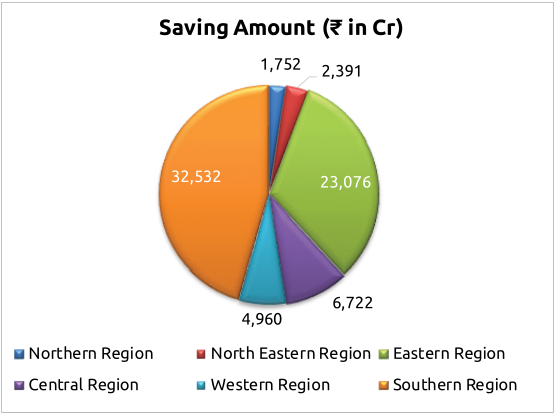
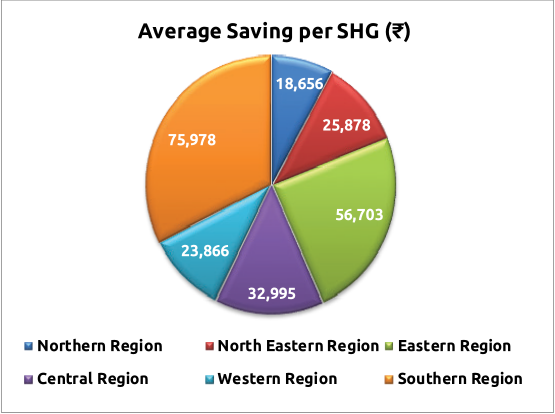
Figure 5.3: Agency wise Savings of SHGs with Banks in FY 2024-25
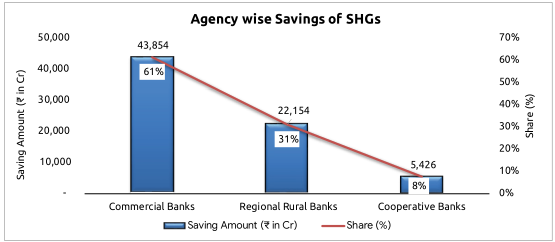
The Commercial Banks with their extensive network and outreach, financial strength, technological advancements, risk management practices and professional expertise, have continued to have the maximum share of savings of SHGs which accounted for nearly 61% of the total savings mobilized. Figure 5.3 depicts the savings of SHGs as on 31st March 2025 with various Banks viz. Commercial Banks, Regional Rural Banks and Cooperative Banks.
5.2.2 Credit disbursement to SHGs
Over the past decade, credit disbursement through the SHG Bank Linkage Programme has grown substantially, with 55.57 lakh SHGs accessing fresh loans totalling ₹2,08,283 crore in the financial year 2024–25. Despite this impressive scale, year-on-year growth has slowed, showing only a slight increase in the number of SHGs and a small reduction in the total amount borrowed compared to the previous year. This suggests the programme is transitioning from rapid expansion to a phase of consolidation. Moreover, the overall stress witnessed in the microfinance sector during the year also have contributed to the slower growth
Regionally, the Southern and Eastern zones remained the primary contributors to credit disbursement under the programme. However, the Southern region’s share has been steadily declining over recent years, while other regions are gaining ground. Additionally, the average loan size for SHGs in the Northern, Eastern, and Central regions remained considerably lower than that in the Southern region, highlighting the need for focused efforts to strengthen sustainable livelihoods and promote income-generating activities across these areas.
Figure 5.4: Region wise Loan Amount Disbursed to SHGs during FY 2024-25
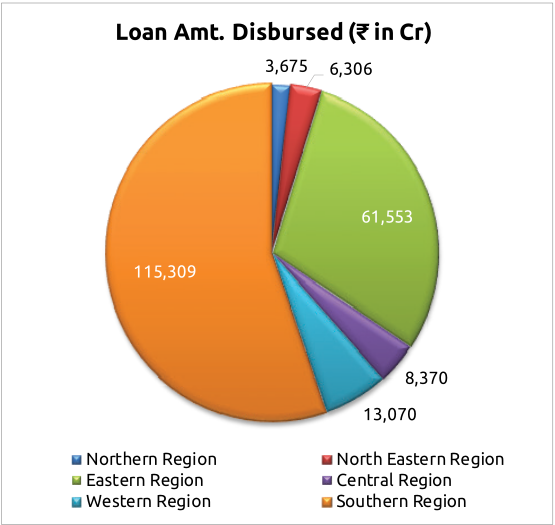
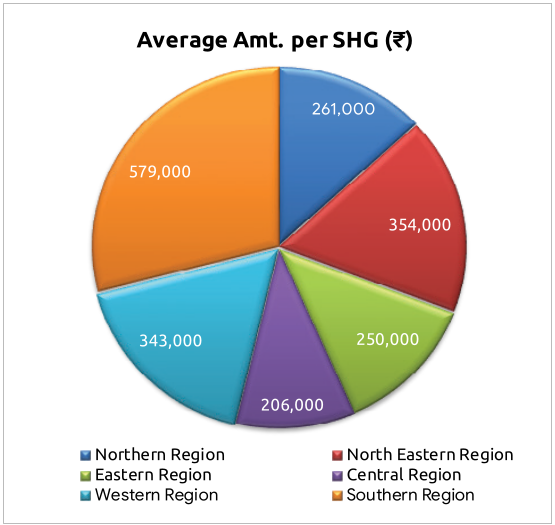
Figure 5.5: Agency wise Credit Disbursement to SHGs during FY 2024-25
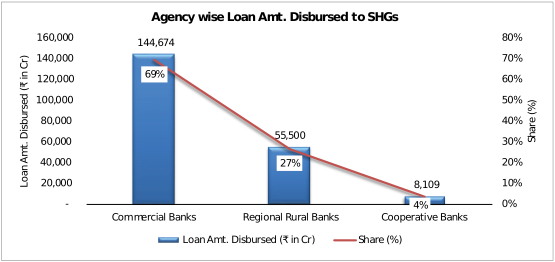
Figure 5.5 shows that the larger share of the loans disbursed during the year was by the Commercial Banks at ₹1,44,674 crore, followed by RRBs with ₹55,500 crore, and Cooperative Banks at ₹8,109 crore. The Commercial Banks accounted for around 69% and RRBs 27%. The Cooperative Banks had a meagre share of 4%
5.2.3 Loans outstanding under SHG-BLP
Loans extended to Self-Help Groups (SHGs) typically range in tenure from 18 to 36 months. There is also cash credit arrangement with banks under which the SHGs borrow and lend to its members. As of 31st March 2025, the outstanding loan amount against SHGs stood at ₹3,04,259 crore.
Regionally, the Southern region maintained the pole position in total outstanding loans, followed by the Eastern region. The average loan outstanding per SHG as on 31st March 2025, increased from the previous year and since the year 2015 has grown nearly six-fold in financial terms. This rise indicates deeper credit penetration and sustained borrowing cycles, underscoring the strengthening financial engagement of SHGs with formal banking institutions.
Figure 5.6: Region wise Loan Outstanding with SHGs as on 31st March 2025
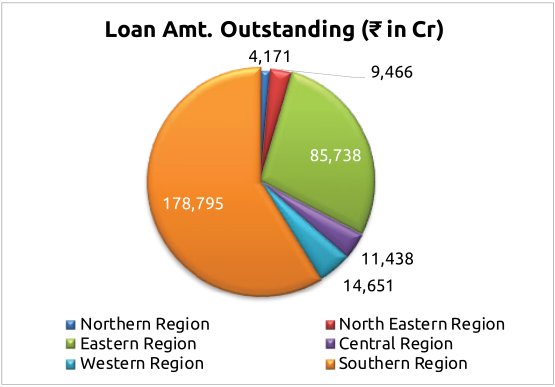
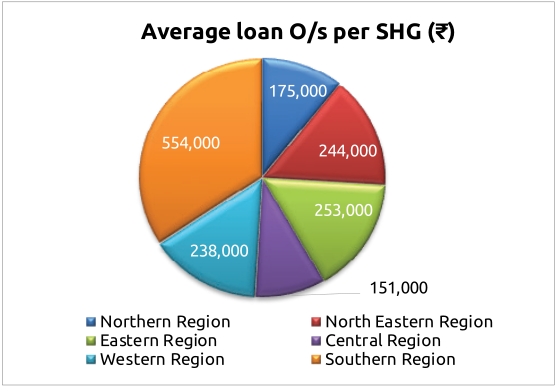
Figure 5.7: Agency wise Loan Outstanding against SHG as on 31st March 2025
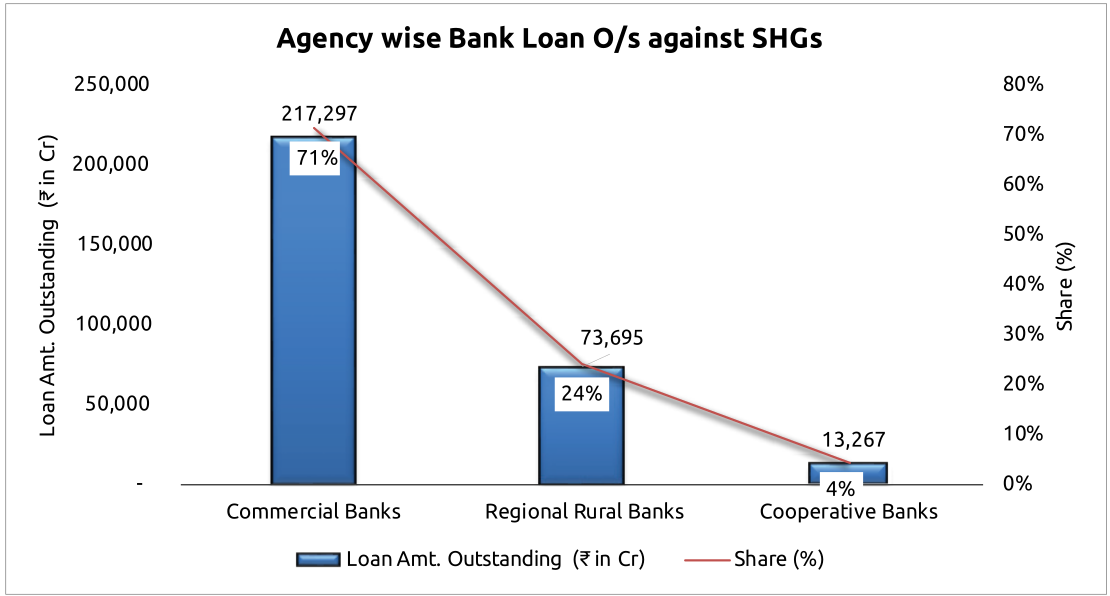
The larger share of credit linkage to Self-Help Groups (SHGs) is by Commercial Banks, followed by Regional Rural Banks (RRBs), while Cooperative Banks contribute a comparatively smaller share.
As of 31st March 2025, Commercial Banks accounted for the largest portion of outstanding loans to SHGs, representing 71% of the total bank credit extended. Despite their smaller operational scale, RRBs held a notable 24% share, reflecting their growing role in rural finance. Cooperative Banks, although limited in reach, contributed approximately 4% to the overall credit linkage.
5.2.4 Non-Performing Assets (NPAs) in SHGBLP
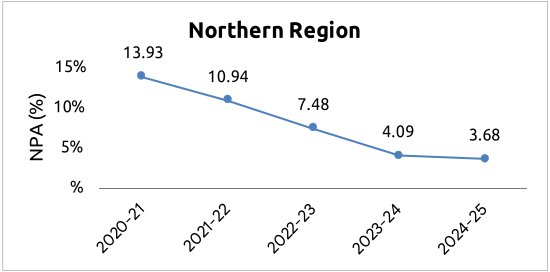
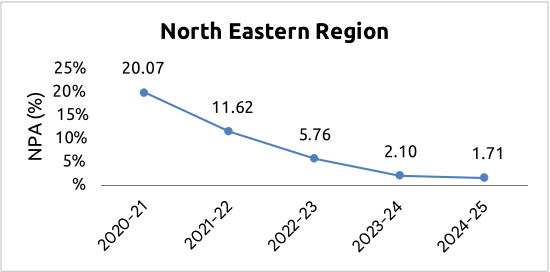
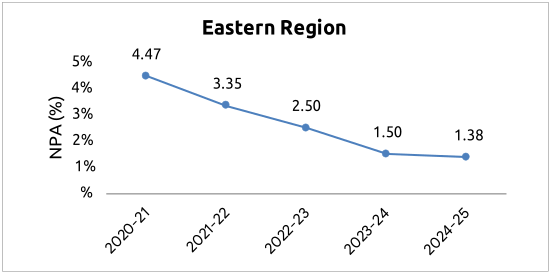
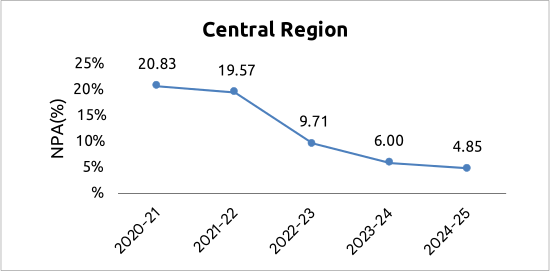
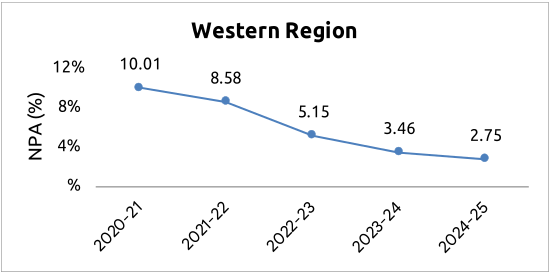
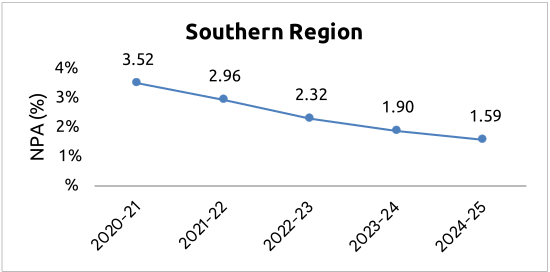
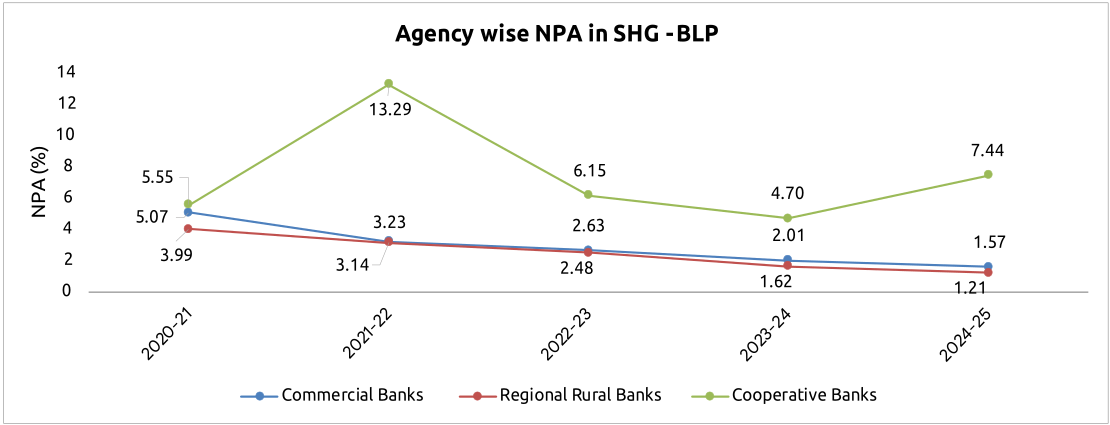
SHG Bank linkage programme always showed the best repayment performance. As of 31st March 2025, the overall level of Non-Performing Assets (NPAs) on bank loans extended to Self-Help Groups (SHGs) had declined nationally to 1.74%. This downward trend in NPAs was observed across all regions during the financial year, with the Southern region also recording a reduction in absolute NPA levels. Regionally, the Southern (1.59%) and North Eastern (1.71%) regions outperformed the national average with lower NPA percentages. Conversely, the Central region continued to show the highest NPA levels relative to outstanding loans. Among the lenders, the Commercial Banks and Regional Rural Banks demonstrated satisfactory loan recovery rates. Whereas the loan extended by Cooperative Banks showed higher NPAs although they had limited exposure to SHG lending. Probably the Cooperative Banks need to have better asset quality, monitoring and management. As of the reporting date, asset quality assessments by institution type revealed that Regional Rural Banks held the strongest position, followed by Commercial Banks and Cooperative Banks.
Figure 5.8: Gross Non-Performing Assets in SHG-BLP during the last 5 years (as on 31st March 2025)